

- HOME
- Financial Management
- Why UAE businesses are moving to cloud accounting and not looking back
Why UAE businesses are moving to cloud accounting and not looking back
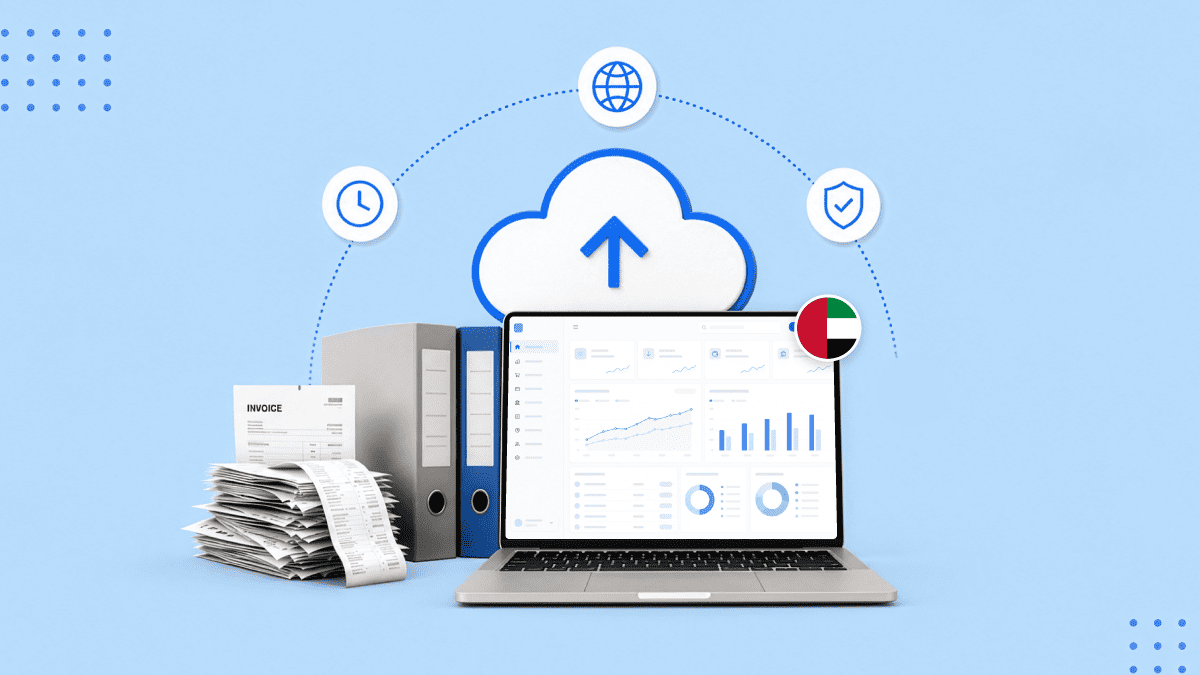
There's a moment most business owners in the UAE recognize. It usually happens around tax season, or during a VAT audit, or when a finance team member goes on leave and suddenly nobody can access the accounts.
That moment is the realisation that spreadsheets and desktop software weren't built for the way business actually works today.
Cloud accounting was.
Here's why cloud accounting is reshaping financial management for companies across Dubai, Abu Dhabi, Sharjah, and beyond.
Real-time visibility into your finances
Traditional accounting software gives you a snapshot of the past. Cloud accounting gives you the present.
When a sale closes in Dubai, it reflects in your books immediately. When an invoice is paid from a Sharjah-based client, your cash flow updates in real time. For business owners who make decisions based on financial data, this isn't a minor upgrade, it's a fundamentally different way of operating.
Your dashboard shows you exactly where the business stands right now: outstanding receivables, pending payables, bank balances, and profit margins. There's no waiting for your accountant to "run the numbers."
Built for UAE VAT compliance
The UAE introduced VAT in 2018, and compliance has become a non-negotiable part of doing business. Cloud accounting software designed with the UAE's tax framework in mind takes much of that burden off your shoulders.
A good cloud accounting system automatically applies the correct VAT rates, generates tax invoices in the required format, and produces VAT return reports ready for filing. Businesses no longer need to cross-check transactions manually or reconcile VAT entries at quarter-end.
For companies dealing with inter-GCC transactions, zero-rated supplies, or exempt categories, having a system that understands local tax rules isn't optional, it's essential.
Work from anywhere across the UAE and beyond
The UAE has one of the most internationally mobile workforces in the world. Executives fly between Dubai and Riyadh. Finance managers work across time zones. Remote work has become the standard, not the exception.
Cloud accounting moves with your team. Whether your CFO is reviewing reports on a flight to London or your accountant is approving expenses from home, everything lives in one accessible, secure place. No emailing spreadsheets, no VPN headaches, no "I'll check when I'm back in the office."
Multi-currency without the headache
Operating in the UAE often means billing in AED, receiving payments in USD, and dealing with suppliers in EUR or INR. Currency conversions, exchange rate losses, and multi-currency reconciliation can become a real operational drag without the right tools.
Cloud accounting handles multi-currency transactions natively, automatically applying exchange rates and letting you generate financial reports in any currency you choose. For free zone businesses with clients across the GCC, Asia, and Europe, this alone can save your finance team hours every month.
Connected to the rest of your business
Accounting doesn't exist in isolation. Invoices come from sales. Expenses come from procurement. Payroll feeds into your P&L. The real power of cloud accounting is how it connects with the rest of your operations.
Modern cloud platforms integrate directly with UAE banks for automatic bank feeds, sync with CRM tools to convert deals into invoices without manual entry, and connect with the software your team already uses. This results in less duplication, fewer errors, and a finance function that actually supports growth rather than chasing it.
Scales as your business grows
A startup in DIFC and a mid-sized trading company in Jebel Ali have very different accounting needs but both will outgrow whatever system they started on if it wasn't built to scale.
Cloud accounting grows with you. Adding users, opening a second entity, expanding into new markets— none of these require a system overhaul. You can manage multiple companies from a single login, control user permissions by role, and expand your plan as your operations deepen.
Security that's stronger than a local server
A common hesitation about cloud accounting is data security. While the concern is fair, the reality is that a well-built cloud platform protects your financial data far more robustly than a local server or laptop-based system ever could.
Enterprise-grade cloud accounting uses 256-bit SSL encryption, two-factor authentication, and automated backups. If a laptop is stolen or a hard drive fails, your data remains intact and accessible. For businesses subject to data governance requirements, increasingly relevant in the UAE, this is a meaningful advantage.
The bottom line
The UAE's business environment moves fast. Regulations evolve, markets shift, and the businesses that adapt quickest tend to win. Cloud accounting doesn't just help you keep cleaner books, it gives your finance function the agility to keep up.
You spend less time reconciling and more time deciding.
If your business is still running on desktop software or patchwork spreadsheets, the question isn't whether to move to the cloud. It's how soon can you make the switch.
If you're evaluating cloud accounting options, Zoho Books is built specifically with UAE compliance in mind. It's FTA-approved, multi-currency ready, and designed to scale with growing businesses. Start Your Free Trial